
Understanding regenerative hair treatments—and why preparation technology matters
Estimated reading time: 5–6 minutes
Have you noticed that your ponytail feels thinner? Perhaps your part looks wider, or you are seeing more hair than usual in the shower.
Hair thinning can be frustrating—especially when you are unsure what is causing it or what you can do about it.
If you have researched regenerative hair restoration, you have probably encountered two commonly discussed treatments: platelet-rich plasma, or PRP, and platelet-rich fibrin, or PRF.
Both are prepared from a small sample of your own blood and contain platelets associated with tissue repair and cellular signaling. However, they are not identical—and neither is a one-size-fits-all treatment.
What is the difference, and what does the research actually tell us?
Important: Hair loss can have many causes. A professional evaluation is essential before beginning treatment, particularly when hair loss is sudden, patchy, rapidly progressing, associated with scalp symptoms, or accompanied by other health changes.
Why Does Hair Begin to Thin?
Hair loss may be influenced by:
- Genetics
- Hormonal changes
- Stress or illness
- Aging
- Nutritional deficiencies
- Thyroid conditions
- Autoimmune or inflammatory conditions
- Certain medications
One of the most common causes is androgenetic alopecia, also known as male or female pattern hair loss.
With this condition, affected follicles may gradually become smaller and produce finer, shorter strands. Over time, the hair may look less dense and more of the scalp may become visible.
Regenerative hair treatments are intended to support existing follicles and potentially improve the environment surrounding them. They cannot create entirely new follicles or reliably restore follicles that are no longer functional.
What Is PRP?
PRP stands for platelet-rich plasma.
Treatment begins with a small blood draw. The blood is placed into a centrifuge, which separates and concentrates platelets within the plasma.
Platelets contain signaling proteins commonly referred to as growth factors. These proteins play roles in processes such as tissue repair, inflammation, blood-vessel formation, and cellular communication.
When PRP is injected into areas of thinning hair, the goal is to support follicular activity and improve the local scalp environment.
PRP has been studied for hair restoration for more than a decade and currently has a larger body of clinical research than PRF-based approaches.
What Does the Research Say About PRP?
A 2024 systematic review and meta-analysis evaluated 14 randomized clinical trials involving 431 patients with androgenetic alopecia.
Researchers found that PRP was associated with an average improvement of approximately 27.6 hairs per square centimeter compared with control treatments.
However, the authors characterized the evidence as low quality. The included studies used different preparation methods and treatment protocols, and there was substantial statistical variability and evidence of publication bias. These limitations make it difficult to predict how well an individual patient will respond.
Review the 2024 study
A larger 2025 review examined 43 randomized trials involving 1,877 participants. It found moderate evidence that PRP may improve hair density and reduce hair loss, but it did not demonstrate a significant benefit for hair thickness. The authors again emphasized the lack of standardized preparation and reporting across studies.
Review the 2025 systematic review
Overall, the research suggests that PRP may help improve hair density for some patients, but outcomes vary and treatment protocols have not been fully standardized.
What Is PRF?
PRF stands for platelet-rich fibrin.
Like PRP, PRF is prepared using a sample of the patient’s own blood. The primary differences involve the preparation process and the final composition of the product.
PRF preparations contain a fibrin structure along with platelets and associated signaling proteins. This fibrin framework may retain platelets and influence how signaling proteins are released after treatment.
These biological characteristics have made PRF an area of growing interest in regenerative aesthetics and hair restoration.
Is PRF Better Than PRP?
Not necessarily.
Although some PRF preparations have interesting biological properties, treatment effectiveness depends on much more than the presence of a fibrin structure. Important factors may include:
- The type and stage of hair loss
- The specific preparation system
- Centrifugation settings
- Platelet and cellular composition
- Injection technique
- Treatment frequency
- The patient’s overall health and contributing medical factors
A 2026 multicenter randomized trial directly compared PRP, injectable PRF, and concentrated growth factors in women with female pattern hair loss.
Participants received four treatments at four-week intervals. Among the 74 patients who completed the study, all three groups experienced increases in target-area non-vellus hair counts at 24 weeks.
The injectable PRF group had an average increase of approximately 26.5%, compared with approximately 14.5% in the PRP group. The concentrated-growth-factor group had an average increase of approximately 27.1%.
These findings suggest that the injectable PRF preparation used in this study may offer additional benefits for certain patients. However, this was one relatively small study involving women with specific grades of female pattern hair loss. The findings should not be generalized to every patient or every PRF preparation system.
Review the 2026 randomized trial
Not All PRP, PRF, and PRFM Systems Are the Same
Terms such as PRP, injectable PRF, concentrated growth factors, and platelet-rich fibrin matrix are sometimes used as though they describe interchangeable products. They do not.
Different preparation systems can produce products with different platelet concentrations, cellular content, fibrin structures, and handling characteristics.
This means that research involving one preparation method cannot automatically be used to prove the effectiveness of another.
Understanding the SELPHYL® PRFM System
At Infinite Wellness Med Spa, we use the SELPHYL Platelet-Rich Fibrin Matrix, or PRFM, System.
After a small blood draw, the sample is processed using a standardized centrifugation procedure. The platelet-containing plasma is transferred through a closed preparation system and converted into a fibrin matrix.
The system is designed to:
- Limit unnecessary handling during preparation
- Support a consistent preparation process
- Retain platelets within a fibrin framework
- Support the release of platelet-associated signaling proteins over time
SELPHYL produces platelet-rich fibrin matrix, or PRFM. It is not identical to the injectable PRF formulation evaluated in the 2026 comparative trial.
Although SELPHYL has distinct preparation characteristics, there is not currently sufficient evidence to conclude that SELPHYL PRFM produces superior hair-restoration outcomes compared with other PRP, PRF, or PRFM systems.
For our practice, it represents a thoughtfully selected preparation system—not a guarantee of better results.
An Important Regulatory Distinction
The SELPHYL system is FDA-cleared for preparing autologous platelet-rich plasma for a specific bone-graft-handling indication. Its use as an injectable treatment for hair restoration is considered an off-label use, meaning the FDA has not specifically evaluated or approved SELPHYL for hair regrowth.
Off-label use does not necessarily mean that a treatment is inappropriate. It means the treating medical professional must determine whether the proposed use is medically appropriate and discuss the available evidence, alternatives, limitations, and potential risks with the patient.
Review the FDA device listing
Review SELPHYL’s system information
What Is Treatment Like?
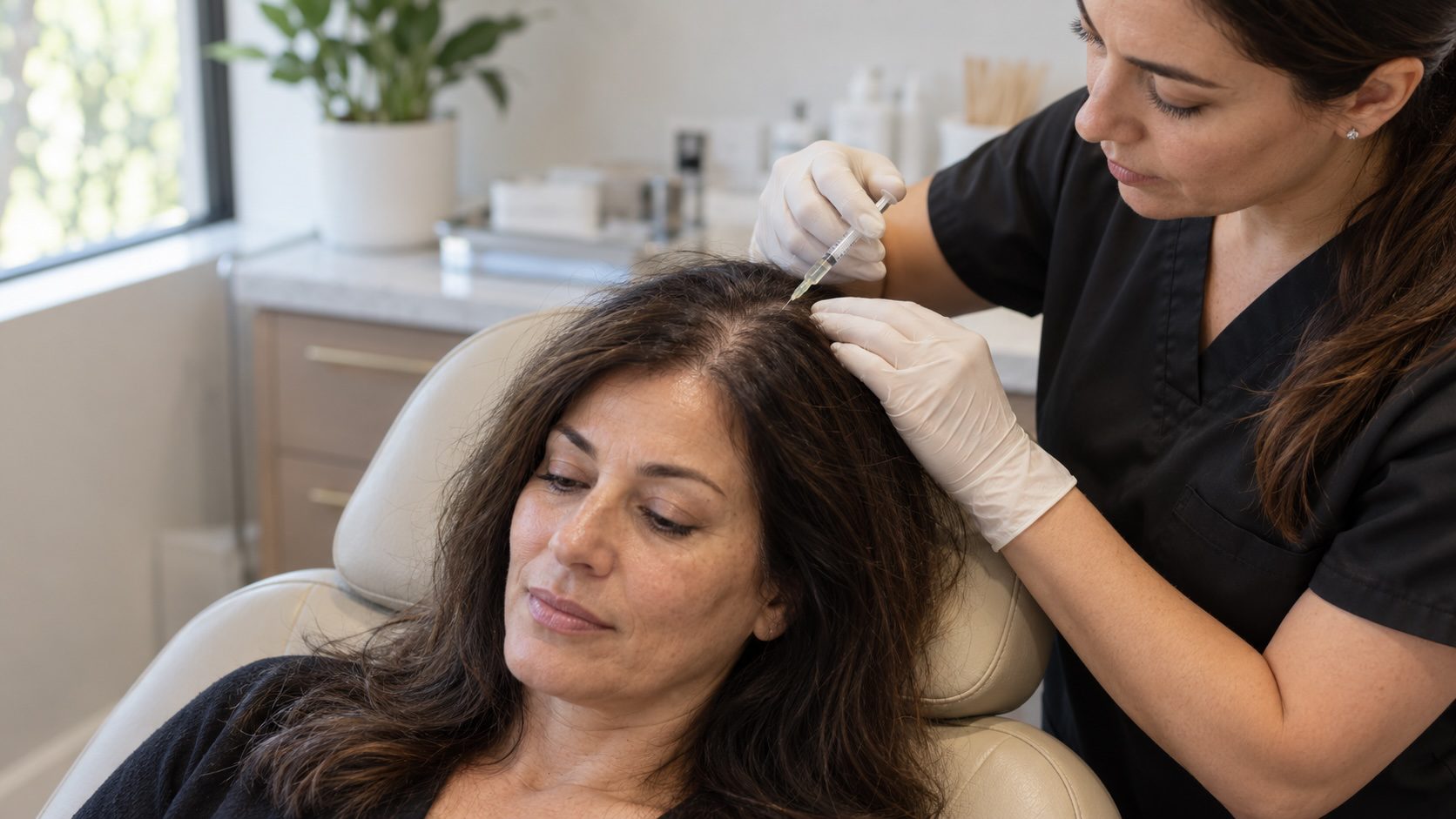
PRP- and PRF-based hair-restoration procedures generally begin with a blood draw and centrifugation. The prepared product is then injected into selected areas of the scalp.
Patients may experience:
- Temporary tenderness
- Redness or swelling
- Mild bruising
- Pinpoint bleeding
- Headache or scalp sensitivity
- Temporary discomfort during injection
There is also a risk of infection and other less common complications. Using a product prepared from the patient’s own blood may reduce the likelihood of an allergic reaction, but it does not eliminate procedural risks.
Most patients can return to routine activities relatively quickly, although individual recovery experiences vary.
When Might Results Become Visible?
Because hair grows slowly, any improvement is expected to develop gradually.
Multiple sessions are commonly recommended. Patients who respond may begin noticing changes over several months, with continued assessment used to determine whether maintenance treatments are appropriate.
Neither PRP nor PRF guarantees:
- New hair growth
- A specific increase in density
- Reversal of advanced hair loss
- Permanent improvement
- The same outcome shown in clinical studies or photographs
Choosing the Right Treatment
PRP currently has the advantage of a larger body of clinical research.
PRF and PRFM offer alternative preparation approaches, with emerging evidence suggesting potential benefits. However, the newest preparation is not automatically the best choice for every patient.
The appropriate treatment depends on understanding:
- The pattern and stage of hair loss
- Whether follicles are still active
- Medical history and medications
- Scalp health
- Possible hormonal or nutritional factors
- Previous treatments
- Personal goals and expectations
Neither PRP nor PRF should replace an appropriate evaluation for iron deficiency, thyroid disease, hormonal changes, autoimmune conditions, medication effects, or other possible causes of shedding.
A Personalized, Evidence-Informed Approach
Hair loss is not always “just hair.”
It can affect how you style your hair, how you feel in photographs, and how confident you feel when you look in the mirror.
At Infinite Wellness Med Spa, we believe hair restoration should combine evidence-informed treatment, individualized care, appropriate technology, and realistic expectations.
Our goal is not to promise perfection. It is to understand your concerns and help you explore treatments that may support healthier, fuller-looking hair over time.
Interested in Learning More?
Schedule a personalized consultation at Infinite Wellness Med Spa in Pasadena, California, to discuss your hair-loss concerns and whether SELPHYL PRFM or another treatment approach may be appropriate for you.
Medical, Regulatory and Results Disclaimer
This article is provided for general educational and informational purposes only. It is not medical advice and should not be used to diagnose or treat hair loss or any other condition.
Individual results vary. No specific result, amount of hair growth, improvement in density, or duration of benefit is promised or guaranteed. Published studies may involve different preparation systems, treatment protocols, patient populations, and outcome measurements that do not reflect an individual patient’s experience.
SELPHYL PRFM is not the same product as every PRP or injectable PRF preparation discussed in the scientific literature. Results involving one platelet-concentrate system should not automatically be attributed to another.
The SELPHYL system is FDA-cleared for the preparation of autologous platelet-rich plasma for a specific bone-graft-handling indication. Use for injectable hair restoration is off-label, and the FDA has not established the safety or effectiveness of SELPHYL for hair regrowth.
PRP- and PRF-based procedures require blood collection and scalp injections. Potential risks include pain, tenderness, swelling, bruising, bleeding, infection, headache, scalp irritation, temporary shedding, unsatisfactory results, and other complications. A qualified medical professional should determine suitability after reviewing the patient’s hair-loss pattern, scalp condition, medical history, medications, laboratory findings when appropriate, and treatment goals.
Patients experiencing sudden, patchy, severe, scarring, inflamed, or unexplained hair loss should seek evaluation from an appropriately licensed medical professional.
Mention of a product, device, study, or treatment does not constitute a guarantee or representation that it is appropriate for every patient.
References
- Kieling L, et al. “Is autologous platelet-rich plasma capable of increasing hair density in patients with androgenic alopecia? A systematic review and meta-analysis of randomized clinical trials.” Anais Brasileiros de Dermatologia. 2024;99(6):847–862. PubMed
- Anitua E, et al. “Platelet-Rich Plasma in the Management of Alopecia: A Systematic Review and Meta-Analysis of Clinical Evidence.” Dermatology and Therapy. 2025;15(11):3213–3252. PubMed
- Li M, et al. “Comparative efficacy and safety of platelet-rich plasma, injectable platelet-rich fibrin and concentrated growth factors for female pattern hair loss: a prospective multicenter randomized clinical trial.” Journal of Dermatological Treatment. 2026;37(1):2659498. PubMed