
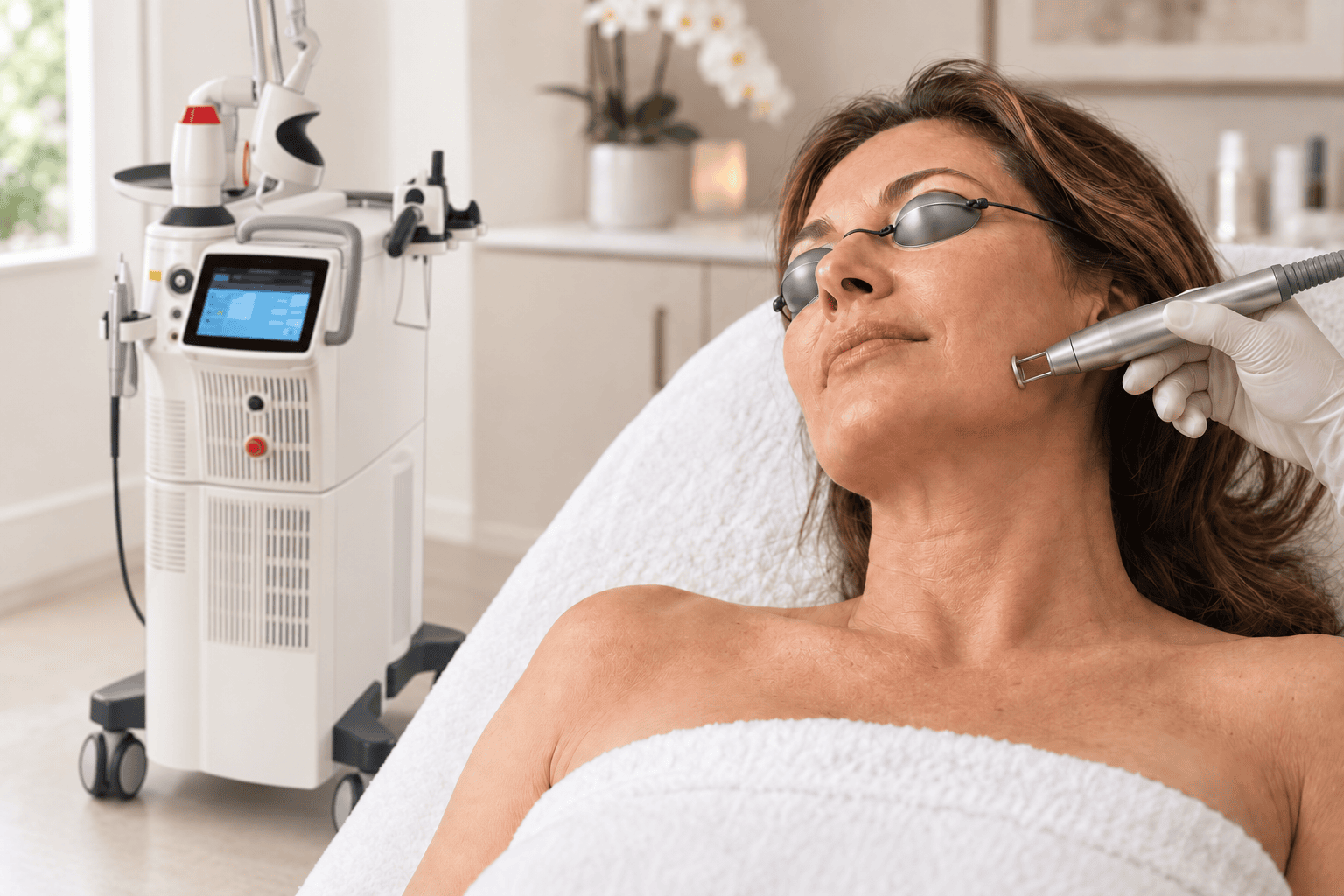
On a GLP-1? Your skin deserves attention throughout your weight-loss journey.
As your body changes, you may notice changes in your skin, too. Your cheeks may look less full, your jawline may appear softer, or the skin on your neck and body may feel looser. You don’t have to wait until you’ve lost all the weight to discuss these concerns.
At Infinite Wellness Med Spa in Pasadena, we can help you explore laser skin tightening during weight loss and create a personalized plan that evolves with you. Starting early gives us time to assess your skin, discuss appropriate treatments, and monitor your progress as your weight changes.
What Causes Loose Skin During Weight Loss?
Skin laxity is the medical term for loose or sagging skin. As you lose weight, the underlying fullness that supported your skin can decrease. Your skin may not fully adapt to those changes.
You might notice less facial volume, more visible lines, or a crepey appearance. These changes can occur with significant weight loss whether or not you take a GLP-1 medication. The American Academy of Dermatology discusses these concerns in its guidance on GLP-1 medications and skin changes.
Loose skin and lost volume are different concerns. Identifying which is affecting your appearance helps us recommend a more appropriate treatment plan.
Why Address Skin Laxity Before Your Goal Weight?
Your goal weight can be a milestone without being the starting point for skin care.
Collagen gives skin much of its structure and support. Because collagen-focused treatments take time to produce visible changes, an assessment during weight loss can help you plan ahead.
An early consultation gives us an opportunity to:
- Document your skin’s current condition.
- Discuss changes you are already noticing.
- Determine whether treatment is appropriate now.
- Reassess your needs as your face and body continue to change.
Starting earlier does not guarantee that you will prevent loose skin or achieve better results than waiting. Some treatments are better planned once your weight stabilizes. The goal is to make informed decisions throughout your journey.
How Do Laser Skin Tightening Treatments Work?
Certain laser treatments deliver controlled heat into the skin to encourage collagen remodeling. Depending on the treatment, they may improve the appearance of mild laxity, fine lines, or uneven texture.
Results develop gradually, and a series of treatments may be needed. Non-surgical laser skin tightening produces more modest changes than surgery and cannot remove substantial excess skin. Learn more in the American Academy of Dermatology’s overview of skin tightening procedures.
Laser Skin Treatments at Infinite Wellness Med Spa
Your treatment should reflect the area you want to address, your skin’s condition, and how much your weight is still changing.
Fotona 4D® for Facial Skin Rejuvenation
Our Fotona 4D® laser facial treatment combines laser treatment steps designed to address facial firmness and texture.
If your concerns include skin laxity and visible lines, we can assess whether this approach fits your goals. If your primary concern is hollowing from lost facial volume, tightening alone may not address it.
NeckLift for Neck and Jawline Concerns
Changes around the neck and jawline can become more noticeable during weight loss. Our NeckLift laser treatment focuses on non-surgical neck rejuvenation and the appearance of loose, crepey skin.
During your consultation, we’ll evaluate whether your concern is related to skin laxity, changing fullness, or a combination of both.
Fotona TightSculpting® for Body Concerns
Fotona TightSculpting® is offered for body contouring and skin tightening.
Because body contouring can involve goals beyond skin firmness, we’ll discuss whether it makes sense at your current stage of weight loss. Further fat reduction is not automatically the right approach for an area that has already lost fullness.
Areas to Discuss at Your Consultation
| Area | Changes you may want to discuss |
|---|---|
| Face and cheeks | Less fullness, visible lines, or looser skin |
| Neck and jawline | Crepey texture or reduced definition |
| Upper arms | Loose skin becoming more noticeable |
| Abdomen | Skin laxity as body size changes |
| Thighs | Changes in firmness and skin texture |
This assessment helps us distinguish concerns that may respond to laser treatments from those that need a different approach.
What to Expect During Treatment
Your visit begins with a review of your skin, medical history, medications, and weight-loss goals.
If laser treatment is appropriate, we’ll explain:
- The recommended treatment and its intended benefits.
- What you may feel during the session.
- The expected recovery and aftercare.
- When we should reassess your progress.
For Fotona 4D, sessions typically take approximately 30–60 minutes, depending on the protocol. Warmth or brief heat sensations may occur, and comfort measures can be discussed beforehand. See our Fotona 4D treatment details.
Number of Sessions and Results Timeline
Your treatment schedule will depend on the procedure, the area being treated, and your response.
Collagen-related improvements develop over weeks to months. Rather than expecting one appointment to address every change, plan for follow-up assessments and a discussion about whether additional sessions are worthwhile.
Continued weight loss may also change your contours, so your treatment plan may need adjustment.
Safety, Comfort, and Recovery
Recovery varies with the laser and treatment intensity. Some treatments involve temporary redness, warmth, or swelling; more intensive resurfacing can require additional healing time.
Laser procedures also carry risks, including pigment changes, burns, or scarring. Your provider should review the risks relevant to your skin and chosen procedure. The American Academy of Dermatology explains these tradeoffs in its guide to skin tightening.
Tell us about your GLP-1 medication and any other prescriptions, supplements, or recent treatments so we can consider them when planning care.
Cost and Treatment Planning
The cost of laser skin tightening depends on the treatment, the number of areas addressed, and the recommended sessions.
At your consultation, ask for a personalized estimate that includes the initial treatment plan and any anticipated maintenance. Planning in stages allows you to reassess your priorities as your weight and skin change.
Laser Treatments and Other Options
Laser treatments may be one part of your plan. Depending on your needs, we may also discuss SkinPen microneedling, collagen biostimulators such as Sculptra or Radiesse, or PRF injections.
These treatments are not interchangeable. We’ll explain their intended uses, limitations, and suitability for your concerns.
Because facial contours may continue to change during weight loss, volume-focused treatments deserve careful timing. Significant excess skin may require a surgical consultation once your weight is stable.
Who Is a Good Candidate?
An assessment is worthwhile if you are noticing skin changes and want to understand your options.
Non-surgical tightening generally works best for smaller amounts of sagging skin. Maintaining a stable, healthy weight is also associated with better candidacy, so treatment during active weight loss should be individualized. See the American Academy of Dermatology’s candidate guidance.
For some clients, we may recommend beginning treatment now. For others, skin care and monitoring may be the most appropriate first steps.
Support Your Skin Between Treatments
Everyday habits remain part of your plan:
- Eat enough protein and a variety of nutrient-rich foods.
- Stay hydrated.
- Protect your skin from the sun.
- Use gentle skin care and moisturize regularly.
- Incorporate strength training when appropriate for your health.
If a reduced appetite makes it difficult to eat enough, speak with the clinician managing your GLP-1 treatment. These habits support overall health, but they cannot guarantee that loose skin will be prevented.
Start Your Personalized Skin Care Plan
You don’t need to wait until your weight-loss journey is complete to give your skin attention.
At Infinite Wellness Med Spa in Pasadena, we’ll help you understand what you’re seeing, explore laser skin treatments, and decide what makes sense now and what may be better addressed later.
Schedule your skin tightening consultation and create a plan that changes with you.
FAQs
Should I wait until I reach my goal weight to discuss laser skin tightening?
No. You can schedule an assessment during weight loss. Whether to begin treatment immediately depends on your skin, health, and expected weight changes.
Can laser treatments prevent loose skin while taking a GLP-1?
There is no guarantee that laser treatments will prevent loose skin. Appropriate treatments may improve certain aspects of firmness and texture, but results vary.
Can laser skin tightening replace lost facial volume?
Laser skin tightening does not replace lost facial fat. If reduced fullness is your main concern, we’ll discuss it separately from skin laxity.
Which laser treatment is best during weight loss?
There is no single best treatment for everyone. Fotona 4D, NeckLift, and TightSculpting address different concerns, and suitability requires an individual assessment.
Will I need more treatment after I finish losing weight?
Possibly. Once your weight stabilizes, we can reassess your skin and determine whether further treatment would be beneficial.