
We use the word glow all the time in aesthetics. Glowing skin, glass skin, radiant skin, but what actually makes skin look healthy and luminous?
There’s more science behind it than you might think.
That glow we’re all trying to achieve isn’t simply about having shiny or freshly moisturized skin. It’s a combination of what’s happening at the surface and underneath it: hydration, cellular turnover, collagen, pigmentation, circulation, and even the way light reflects off your skin.
Here’s what’s actually happening.
It Starts at the Surface
One of the biggest factors in how radiant your skin looks is surprisingly simple: how light hits it.
When the surface of the skin is smooth and hydrated, light reflects more evenly. That creates the appearance of brighter, more luminous skin.
But when there’s dryness, rough texture, dead skin buildup, or uneven pigmentation, light scatters instead. The skin can look dull even when you’re using great skincare.
This is one reason someone can notice such a difference after a professional peel or resurfacing treatment. Improving the texture of the skin changes the way we visually perceive it.
Hydration Really Does Matter
We hear “hydrate your skin” constantly, but there’s a reason for it.
The outermost layer of your skin, called the stratum corneum, acts as part of your protective barrier. One of its jobs is helping your skin retain water.
When that barrier isn’t functioning well, more water can escape from the skin, a process known as transepidermal water loss, or TEWL.
Dehydrated skin tends to make fine lines and texture more noticeable. Properly hydrated skin, on the other hand, generally looks smoother, softer and more plump.
This is where ingredients like hyaluronic acid, glycerin and ceramides can be helpful. They work in different ways to attract moisture or support the skin barrier.
And when the surface is smoother and better hydrated? We get better light reflection, and more of that glow.
Your Skin Is Constantly Renewing Itself
Our skin isn’t static. It’s constantly producing new cells and shedding older ones.
New skin cells originate deeper within the epidermis and gradually move toward the surface. Eventually, they become part of the outer layer and are shed.
As we age, and with factors like sun exposure, this process can become less efficient. Dead cells can accumulate at the surface, contributing to roughness and a dull appearance.
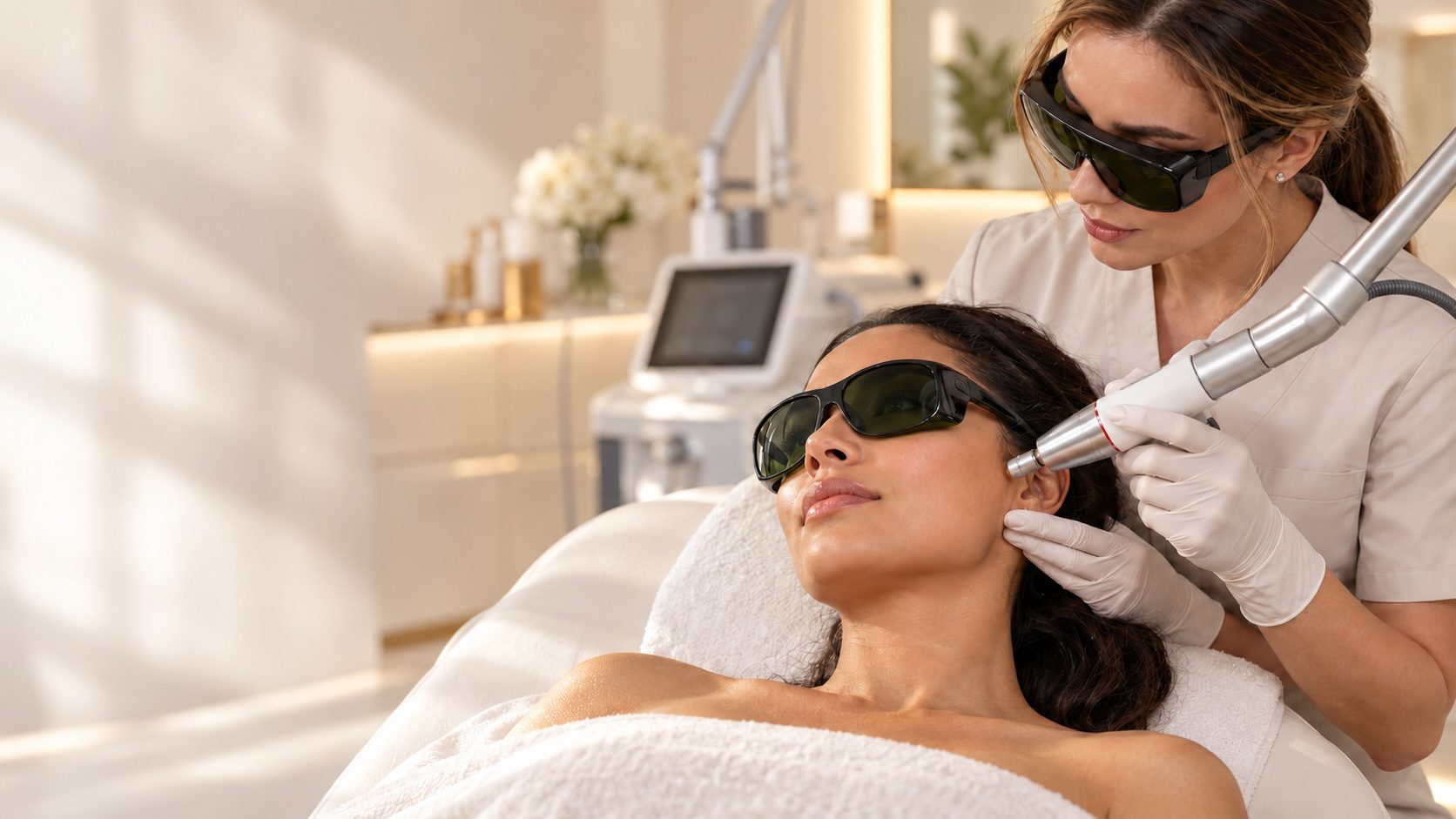
This is part of the science behind treatments like chemical peels and laser resurfacing.
By creating controlled exfoliation or resurfacing, we can remove damaged surface cells and improve the appearance of texture, pigmentation and overall brightness.
It’s not about peeling simply for the sake of peeling. We’re trying to create a more even, healthier-looking surface.
But Glow Isn’t Just About the Surface
This is where things get even more interesting.
Underneath the epidermis is the dermis, which contains collagen, elastin, fibroblasts, blood vessels and other structures responsible for supporting the skin.
Collagen is especially important because it provides strength and structure.
As we age, our collagen naturally changes. UV exposure can accelerate that process by contributing to collagen breakdown and other changes associated with photoaging.
This is why I talk so much about collagen stimulation with my patients.
Treatments such as microneedling and certain laser procedures create a controlled injury that activates the body’s natural wound-healing response. Part of that response involves fibroblasts, the cells responsible for producing components of the skin’s extracellular matrix, including collagen.
And this is also why collagen treatments require patience.
You may get an initial glow after a treatment, but collagen remodeling doesn’t happen overnight. Those changes develop gradually over the following weeks and months.
We’re essentially asking the skin to do something it already knows how to do: repair and remodel itself.
Even Skin Tone Makes a Big Difference
Pigmentation is another major piece of the glow equation.
Melanin is completely normal and important, it helps protect our skin from UV radiation. But when pigment becomes uneven from sun exposure, inflammation, acne, hormones or other factors, the complexion can look less uniform.
Think about two surfaces: one that is smooth and evenly colored and another that has multiple variations in texture and tone. The smoother, more uniform surface naturally appears brighter.
That’s why improving hyperpigmentation can have such a dramatic effect on someone’s overall complexion.
Depending on the person, we may use a combination of professional skincare, chemical peels, microneedling or laser treatments to address pigmentation.
And this is an area where customization is especially important. Different skin tones respond differently to energy-based and resurfacing treatments, so treatment choice and settings matter.
And Yes, Circulation Plays a Role Too
Have you ever noticed that your skin looks particularly good after a workout?
There’s a physiological reason for that.
Your skin contains a network of small blood vessels that deliver oxygen and nutrients to living tissue. Changes in superficial blood flow can temporarily give the skin a pinker, more vibrant appearance.
That doesn’t mean redness equals healthy skin, persistent redness is a completely different issue, but circulation can contribute to that temporary fresh-faced look.
The Part We Can’t Ignore: Sun Protection
We can invest in excellent skincare and advanced treatments, but if we’re not protecting the skin from ongoing UV exposure, we’re working against ourselves.
Ultraviolet radiation contributes to photoaging, including collagen degradation, pigmentation changes, rough texture and wrinkles.
So while SPF may not feel as exciting as a laser or peel, it’s one of the most important parts of maintaining healthy-looking skin.
I tell patients to think of it this way: your treatments are the investment, and sunscreen helps protect that investment.
So, What Creates the Best Glow?
Usually, it’s not one product or one treatment.
It’s a combination of healthy barrier function, hydration, smooth texture, even pigmentation, collagen support and consistent sun protection.
That’s why I prefer looking at skin as a whole rather than chasing one concern at a time.
Sometimes the right plan is a peel. Sometimes it’s microneedling. Sometimes it’s laser treatment or collagen stimulation. And sometimes what your skin really needs is a better home-care routine and consistency.
The goal isn’t simply to make your skin look shiny for a few days.
At Infinite Wellness Med Spa, we focus on improving overall skin quality and creating results that look healthy, refreshed and natural.
Because when we understand what’s happening beneath the surface, “glowing skin” becomes a lot less mysterious.
There really is science behind the glow.
Individual results vary. Treatment recommendations should always be individualized based on skin type, medical history, current skin condition and treatment goals.